

Skip to main content Skip to search Skip to main navigation

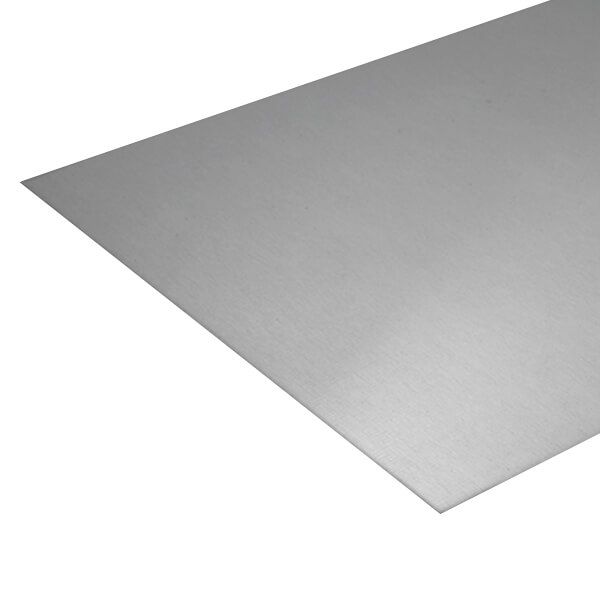
Spring Sheet 301 - 500 x 150 mm

Technical Information - cold-rolled Spring Steel 301


Basic Information and Applications 301

Due to the alloy with 17% chromium and 7% nickel, this material has good corrosion resistance. With this material, high strength is achieved by cold rolling. Compared to material 1.4301, a significantly higher tensile strength up to over 2000 N / mm² can be achieved. The material 301 is therefore very well suited for rustproof precision training tapes and shims as well as for rustproof springs and parts with higher strength.

Further application examples include welded endless belts, conveyor belts and covers in machine tools. The material is approved as a spring material in the DIN EN 10 151 standard.

If there are high requirements for hardness and wear resistance, grades 1.4031Mo should be used (up to 2.00 mm thick) or 1.4034 (from 1.0 to 3.0 mm thick) can be used, If there are high requirements for corrosion resistance, use the materials 1.4404 or 1.4529
in hard-rolled condition. At high temperatures up to approx. 650°Celsius the material 2.4668 (Alloy 718) should be used precipitation hardened state can be used.

Delivery condition

Structure: cold rolled (austenitic with proportions of forming martensite), not hardenable

Surface: 2H, roughness Ra usually 0.10-0.3 μm (imprint of the work roll)

Tensile Strenght: 1100 to over 2000 N/mm²

The tensile strength can be increased by tempering the steel at 330-370 ° C (about 4 hours) by about 100-300 N / mm² depending on the original strength of the material. 

Tolerances

Thickness tolerance: DIN EN 9445 table 1 or T3 (for strength class 15-1700 N / mm²)

Width tolerance: according to DIN EN 9445

Straightness: normal

Flatness: Wave height max. 1.0 mm

mechanical Details

Elongation limit Rp0,2: depending on the tensile strength

Strain A80: depending on the tensile strength

With good edge processing after cutting (e.g. by surface grinding) the following values can be achieved:

Alternating bending stress (mean stress = 0): 550 MPa (50% of the test pattern survives 2 million cycles in normal surroundings), with a bend perpendicular to the rolling direction.

Tensile threshold stress (minimum stress = 0): 420 MPa (50% of the test samples overlook 2 million cycles in normal surroundings), with a bend perpendicular to the rolling direction.

Since the fatigue strength depends on various factors such as the ambient conditions and the edge properties, no values can be guaranteed. In the case of heavy loads or bending that are not perpendicular to the rolling direction, hardened steels such as 1.4301Mo are required.

Depending on the load, the highest application temperature is between 120 and 250 ° C (cf. DIN 17224 - spring band made of stainless steel). Please note that the values for the modulus of elasticity decrease with increasing temperature.

Alloy Designations

German Norm: 1.4310 / X10CrNi 17-7
AISI: 301
ASTM: S 30100
Engl. Norm: 301S21
Franz. Norm: Z12 CN18-09
Japan. Norm: SUS 301

Material - Composition*

C: 0,05 - 0,15 %

Si:

max. 2,000 %
Mn: max. 2,00 %
P: max. 0,045 %
S: max. 0,015 %
Cr: 16 - 19 %
Ni: 6 - 9,5 %
Mo: max. 0,80 %

* for the exact composition can be documented in the form of a test certificate 2.2 or 3.1 (according to DIN 10 204) for each batch.

Physical Information

Density: 7,9 g/cm³
Heat conduction: 15 - 19 W/(m °C) depending on the temperature
Heat capacity: 500 J/(Kg °C) average values at 50 - 100 ° C
Thermal expansion:

15,5x10 -6 (between 30 - 100 °C)

16,0x10 -6 (between 30 - 200 °C)

16,5x10 -6 (between 30 - 300 °C)

Electrical resistance: 0,73 Ohm x mm²/m
Modulus of elasticity: 185 000 MPa at 20°C
Relative permeability µr: maximum 24

Processing information 301

Punching: The cutting gap should correspond to approximately 10% of the strip thickness. The corner radii should be at least 0.25 and the punch diameter min. be twice the tape thickness. For stamped parts, post-treatment by slide grinding is necessary to achieve good fatigue strength.

Laser cutting: This material 301 can be laser cut very well.

Etching: The material is very easy to etch.

Bending: Since the high strength of the material is achieved through cold forming during rolling, the rolling direction has a major influence on bending.

The recommended minimum bending radius also depends on the tensile strength.

Bending transversely (perpendicular) to the rolling direction:

  11-1300 N/mm² 13-1500 N/mm² 15-1700 N/mm² >1900 N/mm²
to 0,25 mm 10,5 x t 1,5 x t 2,0 x t 3,0 x t
0,25 - 0,50 mm 1,0 x t 2,0 x t 2,5 x t 3,5 x t
0,50 - 075 mm 2,0 x t 2,5 x t 3,0 x t not recommended
0,75 - 1,00 mm 2,5 x t 3,0 x t 3,5 x t not recommended

 t = thickness

Bending lengthways (parallel) to the rolling direction::

  11-1300 N/mm² 13 - 1500 N/mm² 15-1700 N/mm²

>1700 N/mm²

to 0,25 mm 2,5 x t 3,0 x t 4,5 x t 12,0 x t
0,25 - 0,50 mm 3,0 x t 4,0 x t 5,0 x t 13,0 x t
0,50 - 0,75 mm 4,0 x t 5,0 x t 7,0 x t not recommended
0,75 - 1,00 mm 5,0 x t 7,0 x t 9,5 x t not recommended

 t = thickness

Recommended strength class for bent parts: 11-1300 N / mm²

Surface grinding: In the hard-rolled state, material 301 is only weakly magnetizable and cannot be clamped on magnetic chucks of grinding machines.

In the soft-annealed condition, it has an austenitic structure and is therefore almost unmagnetizable. Hard rolling causes the formation of forming martensite and thus an increase in magnetizability. Since this is influenced by various factors such as the degree of forming, the material temperature during rolling and also the alloy composition, no special values ​​can be given. With a degree of deformation of 50%, the magnetic permeability is a maximum of 10.0 to 18.0 and with a degree of deformation of 70% a maximum of 15.0 to 24.0 (at 200H).

For springs in a magnetic environment, we recommend stainless spring strip steel 1.4529, which is almost non-magnetizable even when hard-rolled due to its high austenite stability (in stock in thicknesses of 0.05-0.50mm).

Welding: The 301 is very easy to weld like other austenitic stainless steels. However, the heat input at the weld seam can lead to a structural change that reduces the strength.

Due to the higher carbon content of approx. 0.10%, local corrosion can also occur on the weld seam.

Chemical Resistance 301

Assignment in group 4 of the stainless steel table for the chemical resistance of stainless steels. Nirosta is a registered trademark of ThyssenKrupp AG.

This material is therefore less corrosion-resistant than material 1.4404 (group 5), but better than materials 1.4034 and 1.4031Mo, which are both in group 1.

Please check there or by tests to determine whether material 301 is sufficiently resistant to your application. Material 1.4404 or 1.4529 should be used for applications in corrosive environments.


Important NOTE

The technical information listed above or the information provided on the nature or use of the materials serve for description and are not a guarantee of properties. The information with which we want to advise you corresponds to our experience and that of our upstream suppliers. We cannot guarantee the results of processing and application. (03/2024)


thickness 0,05 - 0,3mm
width 150mm
Bronze foils - bronze sheets

Average rating of 5 out of 5 stars

Bronze Foils CW452K 150 x 500 mm - (5 pc./PU)

Bronze Foil - Bronze Sheet Bronze is an alloy of copper (Cu) and tin (Sn). A distinction is made between wrought and cast alloys depending on the processing. Typical application examples are connectors, contact pins, as well as general stamped and bent parts and springs, where good electrical conductivity is necessary In contrast to brass, bronze can also be used in vacuum technology. Properties material CW452K - 2.1020 The bronze alloy CW452K - also called two-alloy - is the most frequently used type of bronze with a tin content of approx. 6%. The alloy CW452K is characterized by a particularly favorable combination of cold formability, strength and hardness. In addition, bronze is very corrosion and wear-resistant as well as seawater-resistant and has good tinnability. Technical information Bronze cannot be magnetized and therefore cannot be clamped on grinding machines. Bronze plates can be laser cut well and are very easy to etch. CuSn6 is easy to weld with all processes. However, the heat input at the weld seam can lead to a structural change that reduces the strength. Bronze is very suitable for soft soldering. The high strength of the bronze plates or the material is achieved by cold forming during rolling. Therefore, the direction of rolling has a great influence on bending. Other applications / properties:

Content: 0.375 m² (€132.40 / 1 m²)

Regular price: From €39.88
thickness 0,05 - 0,3mm
width 150mm
Bronze foil

Average rating of 5 out of 5 stars

Bronze Foil CW452K 150 mm x 5 Meter

Bronze Foil - Bronze Sheet Bronze is an alloy of copper (Cu) and tin (Sn). A distinction is made between wrought and cast alloys depending on the processing. Typical application examples are connectors, contact pins, as well as general stamped and bent parts and springs, where good electrical conductivity is necessary In contrast to brass, bronze can also be used in vacuum technology. Properties material CW452K - 2.1020 The bronze alloy CW452K - also called two-alloy - is the most frequently used type of bronze with a tin content of approx. 6%. The alloy CW452K is characterized by a particularly favorable combination of cold formability, strength and hardness. In addition, bronze is very corrosion and wear-resistant as well as seawater-resistant and has good tinnability. Technical information Bronze cannot be magnetized and therefore cannot be clamped on grinding machines. Bronze plates can be laser cut well and are very easy to etch. CuSn6 is easy to weld with all processes. However, the heat input at the weld seam can lead to a structural change that reduces the strength. Bronze is very suitable for soft soldering. The high strength of the bronze plates or the material is achieved by cold forming during rolling. Therefore, the direction of rolling has a great influence on bending. Other applications / properties: good corrosion resistance easy to solder easy to polish good cold formability good spring properties Use: springs of all kinds, metal hoses, etc. Application: paper, pulp, textile and chemical industry as well as in ship, machine and apparatus construction, tombstones

Content: 5 Meter (€19.06 / 1 Meter)

Regular price: From €70.78
thickness 0,05 - 0,3mm
width 150mm
Bronze sheet

Average rating of 5 out of 5 stars

Bronze Foil CW452K 150 x 500 mm

Bronze Foil - Bronze Sheet Bronze is an alloy of copper (Cu) and tin (Sn). A distinction is made between wrought and cast alloys depending on the processing. Typical application examples are connectors, contact pins, as well as general stamped and bent parts and springs, where good electrical conductivity is necessary In contrast to brass, bronze can also be used in vacuum technology. Properties material CW452K - 2.1020 The bronze alloy CW452K - also called two-alloy - is the most frequently used type of bronze with a tin content of approx. 6%. The alloy CW452K is characterized by a particularly favorable combination of cold formability, strength and hardness. In addition, bronze is very corrosion and wear-resistant as well as seawater-resistant and has good tinnability. Technical information Bronze cannot be magnetized and therefore cannot be clamped on grinding machines. Bronze plates can be laser cut well and are very easy to etch. CuSn6 is easy to weld with all processes. However, the heat input at the weld seam can lead to a structural change that reduces the strength. Bronze is very suitable for soft soldering. The high strength of the bronze plates or the material is achieved by cold forming during rolling. Therefore, the direction of rolling has a great influence on bending. Other applications / properties:

Content: 0.075 m² (€198.53 / 1 m²)

Regular price: From €11.96

Toleranzen & Zugfestigkeiten


In der folgenden Tabelle finden Sie detaillierte Informationen zur Dickentoleranz unserer Präzisionslehrenbänder sowie Unterlegfolien. Unsere rostfreien Fühlerlehrenbänder werden teilweise noch gemäß DIN EN 10258 P gefertigt. Bitte beachten Sie, dass bei einer Bandbreite von 600 mm aus technischen Gründen ausschließlich eine Dickentoleranz nach DIN EN 10258 P realisierbar ist. 

Die jeweiligen Zugfestigkeiten sind für jeden einzelnen Werkstoff spezifisch aufgeführt, sodass Sie eine verlässliche Grundlage für Ihre technische Auswahl erhalten. Sollten Sie zusätzlich Härtewerte nach Rockwell oder Vickers benötigen, können Sie entsprechende Richtwerte unserer Härtevergleichstabelle entnehmen.

Dicke (mm) Dickentoleranzen in mm (+/-) Zugfestigkeit (N/mm²)
T3 - Breite ≤305 T3 - Breite 320–400 EN 10140 - Kaltband EN 9445 -  Breite ~600 EN 9445 - Breite ≤1250 C-Stahl 1.1274 CrNi 1.4310 Messing 2.0321
0,0030,001---->1500
0,0050,001---->1500
0,0060,001---->1500>540
0,0080,002----
>1500
0,010,002---->1500>540
0,0150,002---->1500
0,020,002----2000–2200>1500>540
0,0250,002----2000–2200>1500>540
0,030,003----2000–2200>1500>540
0,0350,003----2000–2200>1500
0,040,003----2000–2200>1500>540
0,0450,003----2000–2200>1500
0,050,003----2000–2200>1500>540
0,0550,003----2000–2200>1500>540
0,060,003----2000–2200>1500>540
0,0650,004----2000–2200>1500>540
0,070,004----2000–2200>1500>540
0,0750,004----2000–2200>1500>540
0,080,004----2000–2200>1500>540
0,0850,004----2000–2200>1500>540
0,090,004----2000–2200>1500>540
0,0950,004----2000–2200>1500>540
0,100,004-0,0150,020,022000–2200>1500>540
0,110,004----1900–2200>1500>540
0,120,004----1900–2200>1500>540
0,130,005----1900–2200>1500>540
0,140,005----1900–2200>1500>540
0,150,005-0,020,020,021900–2200>1500>540
0,160,005----1900–2200>1500>540
0,170,005----1900–2200>1500>540
0,180,005----1900–2200>1500>540
0,190,005----1900–2200>1500>540
0,200,006-0,0250,020,021800–2200>1500>540
0,210,006----1800–22001500–1700>540
0,220,006----1800–22001500–1700>540
0,230,006----1800–22001500–1700>540
0,240,006----1800–22001500–1700>540
0,250,007-0,0250,030,031800–22001500–1700>540
0,260,007----1800–22001500–1700>540
0,270,007----1800–22001500–1700>540
0,280,007----1800–22001500–1700>540
0,290,007----1800–22001500–1700>540
0,300,007-0,030,030,031800–22001500–1700>540
0,350,008----1600–19001500–1700540–610
0,380,008----1600–19001500–1700540–610
0,400,009-0,030,0350,0351600–19001500–1700540–610
0,430,009----1600–19001500–1700540–610
0,450,009----1600–19001500–1700540–610
0,500,010-0,0350,040,041600–19001500–1700540–610
0,550,010----1600–19001500–1700540–610
0,600,010-0,0350,040,041600–19001500–1700540–610
0,650,012----1600–19001500–1700540–610
0,700,012-0,040,04-1600–19001500–1700540–610
0,750,012----1600–19001500–1700540–610
0,800,013-0,040,040,0451600–19001500–1700540–610
0,850,013----1600–19001500–1700540–610
0,900,016--0,04-1600–19001500–1700540–610
0,950,016----1600–19001500–1700540–610
1,000,0180,0180,040,040,0451600–19001500–1700440–540
1,100,0180,018---1600–19001300–1500540–610
1,200,0180,022---1600–19001300–1500540–610
1,300,0200,022---1600–19001300–1500540–610
1,400,0200,022---1600–19001300–1500540–610
1,500,0200,0220,05--1600–19001300–1500540–610
1,600,0230,026---1600–19001300–1500540–610
1,700,0230,026---1600–19001300–1500540–610
1,800,0230,026---1600–19001300–1500540–610
1,900,0230,026---1600–19001300–1500540–610
1,975-0,026---1600–19001300–1500540–610
2,000,0250,0280,06--1600–19001300–1500540–610
2,20-0,028---1600–19001300–1500
2,40-0,028---1600–19001300–1500
2,50-0,030,06--1600–18001300–1500
2,60-0,03---


2,80-0,03---


2,97-0,03---

3,00-0,030,075--1600–1800

3,20-0,034---

3,50-0,034---


3,80-0,034---

4,00-0,034---


4,50-0,034---


5,03-0,04---

Manufactured Parts Inquiry Form


For business and private customers – We manufacture your product, from single parts to series production. Choose the desired material type and thickness from our extensive material portfolio. In addition to standard sheet metal thicknesses, we also stock thick materials, non-ferrous metals, and plastics. Your uploaded data (sketch, drawing, DXF, STEP, or similar formats) will be reviewed by our team of experts. If we have any questions or suggestions for optimization, we will contact you to achieve a result that is both technically and economically optimal.

Laserschneiden

Fine Laser Cutting & Laser Cutting

Precision manufacturing for thin metals and foils – ideal for delicate contours and precisely fitting components up to a maximum material thickness of 2.0 mm. Suitable for the production of shims, sheets, spacer foils, springs, and other demanding precision parts. High dimensional accuracy, clean cut edges, and consistent, reproducible quality – from single parts to series production.

Waterjet Cutting

Precise separation of metals and other materials using high-pressure waterjet technology. The process is gentle on materials and completely free of thermal influence, ensuring that no changes to the material structure occur. Ideal for complex contours as well as thick workpieces up to a maximum material thickness of 100 mm – suitable for both single-part and series production.

Slit Coils & Cut-to-Length Strips

Precisely cut precision gauge strips with thicknesses from 0.03 to 1.0 mm, made from various materials. Widths up to 300 mm (DC04 & non-ferrous metals), up to 600 mm (1.1274, 1.4404), and up to 1,250 mm for 1.4310 – depending on the starting material. Minimum length approx. 50 m; for thicknesses above 0.80 mm, shorter lengths are also possible. Optional with deburred edges, cut-to-length, self-adhesive tape, or packaging in plastic or metal containers.

Material
This field is required
Konfiguration
Rechteck-1 Vorschau
Rechteck-2 Vorschau
Rechteck-3 Vorschau
Spaltband Vorschau
Ring-2 Vorschau
Ring-1 Vorschau
Rahmen-1 Vorschau
Rahmen-2 Vorschau
Rahmen-3 Vorschau
Oval-1 Vorschau
Oval-2 Vorschau
Scheibe-1 Vorschau
Scheibe-2 Vorschau
Shim-1 Vorschau
image/jpeg, image/pjpeg, image/png, image/apng, image/vnd.mozilla.apng, image/svg+xml, image/svg, application/pdf, application/acrobat, application/nappdf, application/x-pdf, image/pdf, application/vnd.openxmlformats-officedocument.wordprocessingml.document, model/step, application/zip, application/x-zip, application/x-zip-compressed, application/vnd.openxmlformats-officedocument.wordprocessingml.document, image/vnd.dxf, model/step
mm
mm
mm
mm
mm
mm
mm
mm
mm
mm
Hinweis: Mindestlänge ca. 50 m, bei Stärken über 0,80 mm auch kürzere Längen möglich. Optional mit entgrateten Kanten, Ablängen, Selbstklebeband oder Verpackung in Kunststoff- oder Blechdosen.
Kontaktdaten

Do you have any questions? Our experts will be happy to assist you.

Schreiber Florian
Schreiber Florian
Sales & Technical Engineering

We support you personally with your inquiry – from technical evaluation to an economically efficient implementation. Get in touch with us, and together we will find the right solution for your component.

Service Hotline

Telephone support and personal consultation:

+49 9471 318 9905

Mon–Thu, 9:00 a.m.–3:00 p.m., Fri, 9:00 a.m.–12:00 p.m. (CET)

Outside business hours, please contact us at

info@metallstore24.de

Product information "Spring Sheet 301 - 500 x 150 mm"

Precision Spring Steel Strip

Precision tapes or metal foils made of spring steel CrNi - hard steel - 301 are used inter alia. in mechanical engineering as underlay foils, for aligning workpieces in grinding machines, adjusting games (assembly of workpieces) or measuring gap dimensions.

Properties material 301

With this material, high strength is achieved by cold rolling. Compared to material 301, a much higher tensile strength can be achieved.

Therefore, the material is very well suited for stainless precision gauges and shims as well as for stainless springs and parts with higher strength.

Due to the alloy with chrome and nickel, this spring steel has good corrosion resistance. Material 1.4404 should be used in a corrosive environment.

If no special requirements are placed on corrosion, the material 1.1274 can also be used.

Technical information

The thickness tolerance is defined according to DIN EN 9445 table 1 or T3 (for strength class 15-1700 N / mm²).

Like other austenitic stainless steels, this steel is very easy to weld. However, the heat input at the weld seam can lead to a structural change (which reduces the strength) and, among other things, local corrosion of the weld seam.

With material 1.4310, when bending or bending, make sure that the bends should always run across the rolling direction. When used as a flat spring, the rolling direction must also be observed.

Further technical information on our cold-rolled spring steel 1.4310 can be found in our data sheet.

Further applications / properties:

  • Welded endless belts
  • conveyor belts
  • very easy to etch
  • weakly magnetizable
  • good corrosion resistance
DIN Material - Name: X10CrNi18-8
Delivery - State: hard
Length: 500 mm
Magnetisable: weakly
Material - Number: 1.4310
Structure: cold rolled (austenitic with parts of forming martensite), not hardenable
Surface: 2H
Tensile Strenght: 13-1500 N/mm², 15-1700 N/mm², 15-1800 N/mm²
Thickness Tolerance: DIN EN 9445 Table 1 or T3 (for strength class 15-1700 N/mm²)
Width: 150 mm
Material: Spring Steel
ASTM/AISI (USA): 301
Norm: DIN 10204
Responsible company
Metall Ehrnsberger GmbH
Uferstraße 44
93158 Teublitz
Germany
094713189905
Responsible person
Florian Schreiber
Uferstraße 44
93158 Teublitz
Germany
094713189905

Safety information according to GHS
Signalword: Warning

Danger notice


Safety notice


6 of 6 reviews

Average rating of 4.5 out of 5 stars


83%

0%

0%

17%

0%


Leave a review!

Share your experiences with other customers.


6 reviews

5 August 2025 11:50

Review with rating of 5 out of 5 stars

alles gut

alles gut

5 August 2025 11:14

Review with rating of 5 out of 5 stars

alles gut

alles gut, schnelle Lieferung

18 June 2025 13:16

Review with rating of 5 out of 5 stars

Hochwertige Ware und schnelle Lieferung, gerne wieder.

Gutes Preis-Leistungsverhältnis und reibungsloser Bestellablauf. Lieferung wie angekündigt und qualitativ Top. Absolut empfehlenswert.

13 September 2024 06:11

Review with rating of 2 out of 5 stars

Federblech 1.4310 - 2mm

Super Service, Blech leider total verzogen und kaum zu gebrauchen.

15 February 2024 12:12

Review with rating of 5 out of 5 stars

Federblech Abschnitte

Tiptop die Ware und die Verpackung .

30 January 2024 11:28

Review with rating of 5 out of 5 stars

Erst klassiger Service

Ein super Service, freundlicher Kontakt!!

PaybyBank u.v.m.